Saturday, July 31, 2010
Organic Pest Control
Thursday, July 29, 2010
Cover Crop Conversation Continued
A question was raised concerning the previous blog entry/email.
I have a question on the cocktail mix. It's my understanding that most cover crops are harvest/cut/flailed, etc.
sometime between the start of flowering and halfway into bloom. With a cocktail, how do you determine the optimum time to take the cover crop down? Is it the flowering schedule of the earliest member of the mix?
The average point of all of them?
And the answer:
Most of our farmers terminate the cover crop with winter kill, meaning it is allowed to fully develop. Before moving into soil health we terminated all sunlight harvest after grain harvest. Now we use the cover crops to harvest the sunlight from grain harvest to winter. This sunlight ultimately becomes additional carbon in the soil. Making increases in soil organic matter more achievable. We have built soil health based no-till systems on the cropland and grazing systems on the rangeland, then the cover crops are used as a bridge to connect the cropland and rangeland. We try for a continual live root, just like native rangeland has. The livestock are a tool to harvest 40-50% of the cover crop biomass, leaving the remainder as soil armor. The livestock can also be used to terminate cover crops by mob grazing. I have attached pictures showing what the soil cover looks like before

and after

having 750,000 lbs of beef per acre graze a cool season cover crop cocktail. Our local Soil Conservation District also has a crop roller which is used to terminate rye or field pea.

We rolled the pea during bloom and the rye during 50%+ anthesis, both were seeded as monocultures. Occasionally we have farmers who terminate a cover crop mixture with herbicide, but only rarely with tillage.
I have a question on the cocktail mix. It's my understanding that most cover crops are harvest/cut/flailed, etc.
sometime between the start of flowering and halfway into bloom. With a cocktail, how do you determine the optimum time to take the cover crop down? Is it the flowering schedule of the earliest member of the mix?
The average point of all of them?
And the answer:
Most of our farmers terminate the cover crop with winter kill, meaning it is allowed to fully develop. Before moving into soil health we terminated all sunlight harvest after grain harvest. Now we use the cover crops to harvest the sunlight from grain harvest to winter. This sunlight ultimately becomes additional carbon in the soil. Making increases in soil organic matter more achievable. We have built soil health based no-till systems on the cropland and grazing systems on the rangeland, then the cover crops are used as a bridge to connect the cropland and rangeland. We try for a continual live root, just like native rangeland has. The livestock are a tool to harvest 40-50% of the cover crop biomass, leaving the remainder as soil armor. The livestock can also be used to terminate cover crops by mob grazing. I have attached pictures showing what the soil cover looks like before
and after
having 750,000 lbs of beef per acre graze a cool season cover crop cocktail. Our local Soil Conservation District also has a crop roller which is used to terminate rye or field pea.
We rolled the pea during bloom and the rye during 50%+ anthesis, both were seeded as monocultures. Occasionally we have farmers who terminate a cover crop mixture with herbicide, but only rarely with tillage.
Cover Crops
The following is excerpts from an email conversation concerning cover crops for a local organic farm. I am finding it very useful as this particular aspect of sustainable farming is difficult for me to understand.
Your first attempt at planning a cover crop mixture is very good. As I recall some of the resource concerns included armor (surface residue), crop diversity, soil aggregates, nutrient cycling, and infiltration to name a few. I see the mixture consists of cool season broadleaves and cool season grass, which is what we would use here for a fall seeding after harvest. The high carbon portion appears a little high, with the first 4 species making up 50%, while the legume may be a little low at 30% of the mix. I would suggest decreasing the high carbon to 40% and increasing the legume to 40%. Possibly an additional legume could be added, such as Lentil. The brassica portion at 20% looks good, since they are nitrogen scavenging and low carbon you do not need very much. The high carbon will give you soil armor and their roots will improve the soil aggregates and soil organic matter. The legumes will improve the nutrient cycling, while the brassicas create streets and avenues for the water to move into the soil profile. Improving soil health is about restoring balance, and the cover crop mixtures will help you with this task. Always try to include crop types in the cover crop mixture that are not used in the annual crop rotation, this will improve crop diversity and help feed the soil biology a more balanced diet.
I attached two cover crop pictures too.

[The photo above depicts] a 14-way mixture, which is primarily cool season. It was seeded at the Menoken Farm on May 12 and includes: wheat, oat, forage pea, lentil, ac greenfix, turnip, radish, sunflower, Italian rye grass, hairy vetch, sweet clover, phacelia, canola, and flax. The native pollinators did very well with this mixture too.

[This photo is] a primarily warm season 11-way mixture, and was seeded on June 14th at the Black Leg Ranch. It consists of: pearl millet, proso millet, sudan, soybean, cowpea, sunflower, radish, turnip, sweet clover, canola, and corn. Both are based on the clients resource concerns and objectives. This is not the first time that nature has seen this many different plants together. We have to understand they are working together and not competing. Thank you for your interest in soil health.
I have used this email without permission from it's author but thank him nonetheless.
Your first attempt at planning a cover crop mixture is very good. As I recall some of the resource concerns included armor (surface residue), crop diversity, soil aggregates, nutrient cycling, and infiltration to name a few. I see the mixture consists of cool season broadleaves and cool season grass, which is what we would use here for a fall seeding after harvest. The high carbon portion appears a little high, with the first 4 species making up 50%, while the legume may be a little low at 30% of the mix. I would suggest decreasing the high carbon to 40% and increasing the legume to 40%. Possibly an additional legume could be added, such as Lentil. The brassica portion at 20% looks good, since they are nitrogen scavenging and low carbon you do not need very much. The high carbon will give you soil armor and their roots will improve the soil aggregates and soil organic matter. The legumes will improve the nutrient cycling, while the brassicas create streets and avenues for the water to move into the soil profile. Improving soil health is about restoring balance, and the cover crop mixtures will help you with this task. Always try to include crop types in the cover crop mixture that are not used in the annual crop rotation, this will improve crop diversity and help feed the soil biology a more balanced diet.
I attached two cover crop pictures too.
[The photo above depicts] a 14-way mixture, which is primarily cool season. It was seeded at the Menoken Farm on May 12 and includes: wheat, oat, forage pea, lentil, ac greenfix, turnip, radish, sunflower, Italian rye grass, hairy vetch, sweet clover, phacelia, canola, and flax. The native pollinators did very well with this mixture too.
[This photo is] a primarily warm season 11-way mixture, and was seeded on June 14th at the Black Leg Ranch. It consists of: pearl millet, proso millet, sudan, soybean, cowpea, sunflower, radish, turnip, sweet clover, canola, and corn. Both are based on the clients resource concerns and objectives. This is not the first time that nature has seen this many different plants together. We have to understand they are working together and not competing. Thank you for your interest in soil health.
I have used this email without permission from it's author but thank him nonetheless.
Friday, July 16, 2010
Hot enough for ya?
The weather has been nice lately; I especially enjoy the cool overcast mornings. But I bet your plants are suffering. We have received about 1" less than average of rain so far and have had two (at least)spells of intense heat. For those of you without a swimming pool, it can be tough to cool down. Next time you are sitting inside with a cold beer while watching Buffy reruns, think of your poor plants wilting in the afternoon swelter. Vegetables won't set fruit when it gets over 90F. Heat stressed plants are more susceptible to disease and pest damage. But when you continue to dump water on them, your water bill will punish you.
You know where this going...
You need to mulch. Mulches, like compost, are a universal cure all. A thick layer of organic mulch keeps soil temperatures low. It helps retain moisture in the soil. (Did you know that in New Mexico, we have the evaporative average of 60" annually? That means that in New Mexico, the natural evaporation of water from soil to the atmosphere averages 5 feet a year. 5 feet! We only get 8" or so of rain to replenish that.) That moist soil provides a habitat for beneficial organism that create a healthy growing environment for plants. It's not by accident that bushes and trees drop their leaves periodically; they are providing mulch to protect and build the soil in which they live.
Although visually pleasing mulch is in some cases as important as properly functioning mulch, some materials perform better than others in some situations.
Windy areas: we have seen over the years that particle shape is as important as particle size when choosing a mulch for a windy area. An elongated shape tends to allow the mulch to knit together so that it stays in place better. These mulches also do well in well traveled areas.
A coarsely ground woody material is a good example. We call this Native Mulch

Another good example is this material. It is a little more decorative. We call it Black and Tan.
Established Trees and Shrubs: The problem with amending the soil around established trees and shrubs is that an disturbance of the soil will damage valuable feeder roots. So a mulch that contains a lot of humic acid containing compost will perform two functions: feed and protect the soil.

Forest Floor Mulch is an excellent mulch for established trees.
Decorative areas: Sometimes you want to show off a rose garden or create a pathway. A good mulch for that application would be a uniform material. These are generally processed more and will be a bit more expensive. Pecan Shells or Wood Mulch are excellent materials.
A new mulch we have is a good pathway mulch. It is a certified playgound mulch called Playsoft.

It's light in color, very uniform in particle distribution, attractive and soft.
Vegetable areas: Now here is where it gets fun. I like to use short fibered mulched in the veggie garden because they generally break down faster. Short fibered materials are usually not as carbonaceous so they won't rob nitrogen from you prized tomatoes. The best part (to me at least) is that these potential mulches are everywhere for the taking. Grass clippings or leaves make great mulches for veggie gardens. Of course, an excellent mulch for your veggies is a compost approved for use on certified organic farms...Premium Compost.
You know where this going...
You need to mulch. Mulches, like compost, are a universal cure all. A thick layer of organic mulch keeps soil temperatures low. It helps retain moisture in the soil. (Did you know that in New Mexico, we have the evaporative average of 60" annually? That means that in New Mexico, the natural evaporation of water from soil to the atmosphere averages 5 feet a year. 5 feet! We only get 8" or so of rain to replenish that.) That moist soil provides a habitat for beneficial organism that create a healthy growing environment for plants. It's not by accident that bushes and trees drop their leaves periodically; they are providing mulch to protect and build the soil in which they live.
Although visually pleasing mulch is in some cases as important as properly functioning mulch, some materials perform better than others in some situations.
Windy areas: we have seen over the years that particle shape is as important as particle size when choosing a mulch for a windy area. An elongated shape tends to allow the mulch to knit together so that it stays in place better. These mulches also do well in well traveled areas.
A coarsely ground woody material is a good example. We call this Native Mulch
Another good example is this material. It is a little more decorative. We call it Black and Tan.
Established Trees and Shrubs: The problem with amending the soil around established trees and shrubs is that an disturbance of the soil will damage valuable feeder roots. So a mulch that contains a lot of humic acid containing compost will perform two functions: feed and protect the soil.

Forest Floor Mulch is an excellent mulch for established trees.
Decorative areas: Sometimes you want to show off a rose garden or create a pathway. A good mulch for that application would be a uniform material. These are generally processed more and will be a bit more expensive. Pecan Shells or Wood Mulch are excellent materials.
A new mulch we have is a good pathway mulch. It is a certified playgound mulch called Playsoft.
It's light in color, very uniform in particle distribution, attractive and soft.
Vegetable areas: Now here is where it gets fun. I like to use short fibered mulched in the veggie garden because they generally break down faster. Short fibered materials are usually not as carbonaceous so they won't rob nitrogen from you prized tomatoes. The best part (to me at least) is that these potential mulches are everywhere for the taking. Grass clippings or leaves make great mulches for veggie gardens. Of course, an excellent mulch for your veggies is a compost approved for use on certified organic farms...Premium Compost.
Labels:
mulch,
pecan shells,
playground mulch,
playsoft,
vegetables
Friday, July 02, 2010
Vote for a Charity
This was forwarded to me by an old friend.
http://today.msnbc.msn.com/id/38027143/ns/today-what_do_you_care_about_today/
What warrants a blog entry this time was the dilemma between the organizations from which to choose. The old school in me says that surfing always trumps anything else. There really is a cleansing quality to the surf that every one should test. But the new school in me sees a huge demand for urban farms. My recent experience with our Soilutions' sign painting makes me want to vote for the urban art project.
So, I leave it up to you all to vote your heart. I don't think there is a bad choose.
Friday, June 25, 2010
Los Poblanos Lavender Festival
Make arrangements to attend this year's Lavender Festival at Los Poblanos Organic Farm. More information at
http://www.lospoblanos.com/lavender_farm/-/lavenderfestival/#
This year, Ski has been working really hard to organize foodwaste collection at the festival. Special events pose specific hurdles when it comes to organic waste collection. The general public is notoriously unreliable at separating organics from non-organics. This year, as I understand it, there will be a slew of volunteers to stand by the collection carts to help festival attendees properly sort all recyclables, not just the organics.
So when you go, thank the volunteers and pay special attention to the green carts marked "Organics Only" and know that you are helping us reduce local greenhouse gases.
Not to be outdone, Soilutions' owners Jim and Karen Brooks will be offering a composting workshop for the event. If you've never seen them speak, you will be in for a treat; be prepared to leave energized about your home compost.
Friday, June 18, 2010
Seedlings Up For Grabs
So a long time customer just came in with several flats of Tomato starts. There are about 200? They were grown by an organization called seed2need out of Corrales. As I understand it, they grow food on vacant and abandoned lots and donate the food to the food bank system. They grew way too many seedlings this year, so want to share their wealth a little. They only ask that you follow in their footsteps and give some of the tomatoes to the food banks. The Storehouse on Broadway was suggested but there are several. Our customer works at RoadRunner Food Bank, so there is another one to consider.
Labels:
Food Bank,
free seedlings,
garden,
tomatoes,
urban gardening
Wednesday, June 16, 2010
Vermicompost for Sale
Every six months or so, we clean up our worm beds. When the beds contain more castings than fresh food for the worms, it becomes toxic to the worms. They become lethargic, get smaller and, if left alone, will die. So we dig the worm castings out and replenish the feed stocks. This year I used a combination of leaves and grass clippings. After I dug out the bin, I passed the material over a 1/4" screen to get most of the worms out and to separate any large or uncomposted material from the fine particle sized casting. The worms and the larger pieces go back into the bin while the finer material goes into the garden. Or if you want, it can go into YOUR garden. We have a limited amount until this fall, so get it now. One cubic foot bags sell for $10. bring your own 5 gal bucket and save $3.
Hope to see you soon.
Friday, June 11, 2010
Rubber Necking
Everyone likes a good fire.

I don't think that the building has been vacant for years and is now for sale has anything to do with it.

I mentioned this property in a post dated July 2nd 2009.. As I recall, I was complaining that it was properties like this that got me depressed sometimes. It didn't occur to me that burning the place was a viable solution. Maybe I was wrong.

As I write this, our delivery truck is detained at the top of Bates Rd. Something about a hazard. I wonder if they are going to evacuate us?
Then it got really big.
I don't think that the building has been vacant for years and is now for sale has anything to do with it.
I mentioned this property in a post dated July 2nd 2009.. As I recall, I was complaining that it was properties like this that got me depressed sometimes. It didn't occur to me that burning the place was a viable solution. Maybe I was wrong.
As I write this, our delivery truck is detained at the top of Bates Rd. Something about a hazard. I wonder if they are going to evacuate us?
Then it got really big.
Thursday, June 10, 2010
The New Face of Soilutions, part 2
For a look at what it takes to re-do a "simple" sign, go to: http://www.actualcreative.com/presentations/soilutions/
The original sign was a "Bates Lumber" sign (we are situated on the same property as the old Bates Lumber Mill), so the structure itself is probably 30-40 years old. You know us: re-use when ever possible.
The first question I had for Danny was how quickly it would get "tagged" by the local graffiti-ists. He said that the culture among the artists prohibited covering up or tagging a well-done mural: honor among thieves so to speak.
I suppose that last comment is unfair, at least to Danny. Here in Albuquerque, spray paint is considered a blight to communities performed by thugs and deadbeats. Obviously, to others outside our area, i.e., New york City, it is an art performed by artists.
Once again, I am enlightened by a customer.
Labels:
ActualCreative,
advertising,
compost site,
graffiti,
recycled art,
sign,
spray paint
Wednesday, June 09, 2010
The New Face of Soilutions
Hopefully, you all will see this for yourself. It's the sign at the end of Bates Rd.

We are pretty good at what we do, i.e., make compost. We are not very good at advertising. So when this guy walked into our office and said that he wanted to re-paint our sign, we said okay. We had been thinking of re-doing it for some time; each morning the rust spots bothered us. And now that the RailRunner comes by several times each day, we figured an old rusty sign wasn't the best face for our business.
I encourage you all to check out the guy's website (http://www.actualcreative.com), but in the meantime, here's what I know of him. His name is Danny Skinz and he owns and operates an advertising business in New York City: big clients like Chrysler, Tampico, Nintendo, Ecko, and now Soilutions. Then he had an epiphany, and moved to NM after studying Permaculture. I don't know how he found us (how does anyone find us?) but decided that he could help us out.
His real love is aerosol, i.e. spray paint, and what he really wants to do is paint our delivery trucks. Any one who knows us knows that we don't make quick decisions. So we agreed to have him re-work the sign as a test run. Not a test run for him as much as a test run for us to see if the "urban" style would work for us.
Well, we are as tickled with it as anyone could be. I think it is sharp, unique, and speaks to the growing crossover market of agricultural and urban gardening in which we find ourselves deep in the midst . As one customer said yesterday, "it puts you into the twentieth century finally."
So please let us know what you think as you drive by on your way to recycle those branches, or to buy mulch for your newly planted trees. And look for Ski in our soon to be freshly painted delivery truck at a restaurant or cafe near you .
Labels:
ActualCreative,
advertising,
graffiti,
sign,
spray paint,
urban gardening
Thursday, May 27, 2010
Plants for Sale
I have some plants for sale. They are in 4" pots and some 1 gal. containers.
Cosmos are a standard in any garden. These are a variety of colors. Full sun and moderate water. Check out http://aggie-horticulture.tamu.edu/archives/parsons/flowers/cosmos/cosmos.html for more information.

Russian Sage. This is a beautiful shrub but it must be kept under control. Once established, it needs no water. Plant it in direct sun and in poor soil. Check out http://www.americanmeadows.com/Perennials/OtherPerennials/perovskia-little-spire.aspx for more information.

Bee Balm is a very hardy herb with many uses. Check out http://www.altnature.com/gallery/beebalm.htm for more information. The 4" plants will grow and produce bee-loving blooms all summer.

Prices: 4" pots $2.50 each
1 gal. $5.00 each
I have many more. Please feel free to ask me what all is available.
Labels:
bee balm,
cosmos,
monarda,
plants,
plants for sale,
russian sage
Wednesday, May 26, 2010
Gulf Oil Spill
I wonder if they could use compost in those booms? It's biologically active, loves carbon, won't harm the environment like dispersant.
Here's a blog from San Francisco concerning the gulf coast catastrophe:
http://sfbaykeeper.blogspot.com/
This is big folks. Let's not be complacent.
Here's a blog from San Francisco concerning the gulf coast catastrophe:
http://sfbaykeeper.blogspot.com/
This is big folks. Let's not be complacent.
Tuesday, May 11, 2010
Fun with Recycling part 4
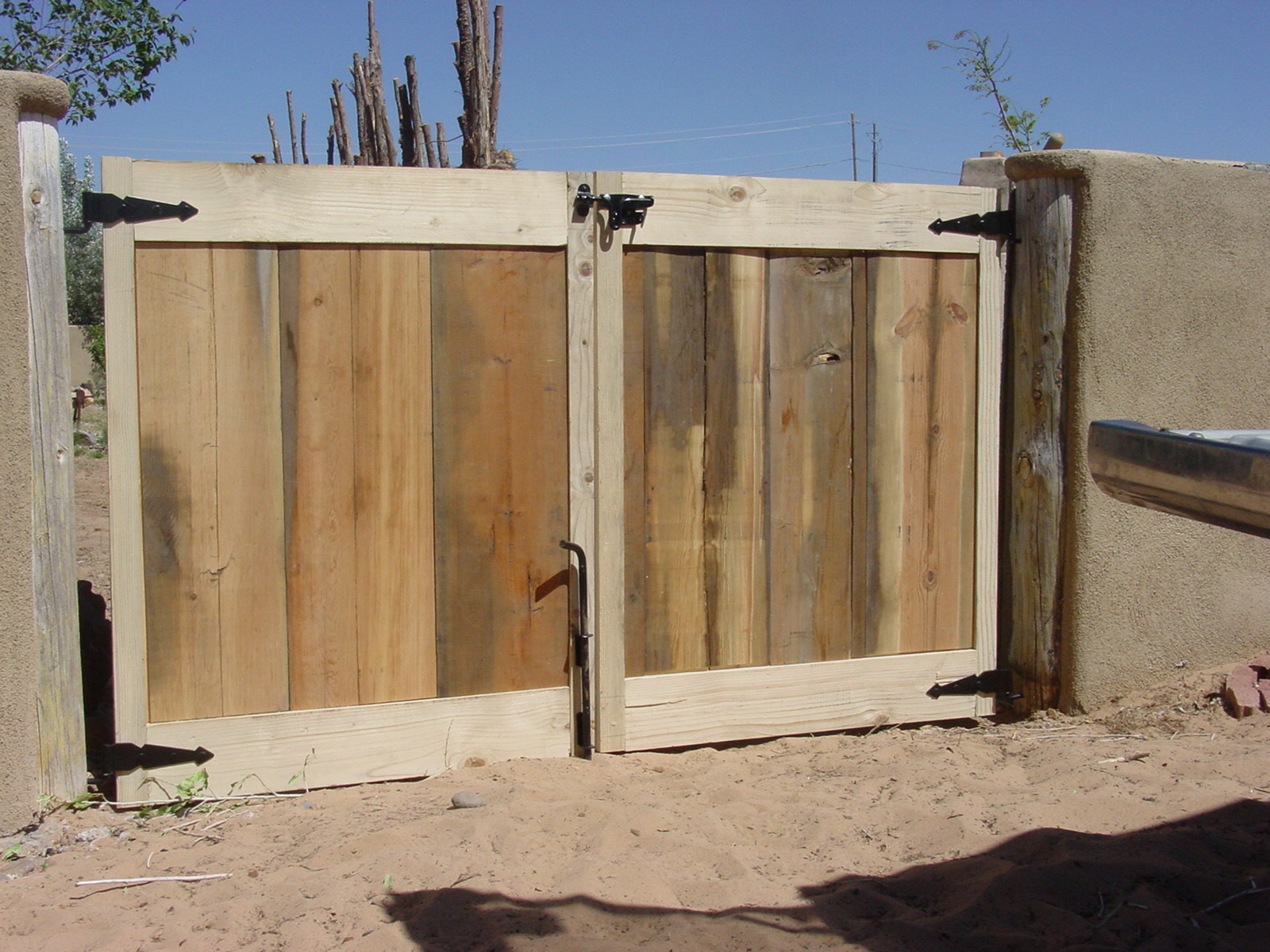
Here are some new examples of what can be done with recycled lumber.

This is a custom "dutch" double gate made to fit a newly constructed block wall. The tops open to let the sunset in while keeping the dogs in the courtyard.

This is a much simpler gate. The problem here was installation.
Both gates are made with Douglas fir scrap lumber using mortise and tenon techniques.
This is a custom "dutch" double gate made to fit a newly constructed block wall. The tops open to let the sunset in while keeping the dogs in the courtyard.
This is a much simpler gate. The problem here was installation.
Both gates are made with Douglas fir scrap lumber using mortise and tenon techniques.
Saturday, May 08, 2010
Mother's Day
In honor of those who gave of their life so that we might experience ours, I am adopting a new ritual: I will now plant my warm season seeds on Mother's Day. What better way to remind myself of the beautiful cycle of birth, nurturing, and reward that started and continues with my mother?
Thursday, April 29, 2010
April is the Cruelest Month
"In the very essence of poetry there is something indecent
a thing is brought forth which we didn't know we had in us."
---Czeslaw Milosz, Ars Poetica
It is said that gardening is an exercise in faith. We plant seed, water, weed, on the belief that a miracle will happen. And when it does, we experience the elation of life both externally with having aided the seeds' growth, and internally when we realize that there are things greater than we are. As the seed grows toward the sun, we, too, grow.
Whitman writes:
Now I am terrified at the Earth! it is that calm and patient,
It grows such sweet things out of such corruptions,
It turns harmless and stainless on its axis, with such endless successions of
diseas’d
corpses,
It distils such exquisite winds out of such infused fetor,
It renews with such unwitting looks, its prodigal, annual, sumptuous crops,
It gives such divine materials to men, and accepts such leavings from them at last.
--Excerpt from This Compost by Walt Whitman
April is indeed a cruel time. It offers so much hope that will be dashed by October. But it is a kind month too, offering fruitfulness from last year's "fetors".
Thursday, April 22, 2010
Friends and the Garden
I'd like to discuss the value of gardens. I mean to get past the obvious values: fresh fruits and vegetables, beautiful flowers, shade, stress release, exercise, creativity, solitude peacefulness, energy savings, etc.
I have been seeing A LOT of people lately at the compost site; a lot of regulars, usuals, and first timers alike. Not many of them are from San Francisco, nor are they poets with an interest in French literature. Yet every person coming through our gates has something in common: gardens. Some are starting new gardens, some are old hands; some are revitalizing an old orchard, some are remodeling an inherited garden. Everyone is smiling. Everyone has committed to make the trek to what I call our South Valley Paradise.I don't see that kind of elation in a hospital, or office, or shoe store, or even in a restaurant. Gardeners are naturally happy people.
But there is something more.When I was young and surfing in the Pacific everyday, I was always struck by the camaraderie that seemed inherent in the lifestyle.Old guys, young guns, lawyers, bums, long boarders, short boarders, single fin, three fins; we all knew something that the "landlubbers" didn't know. The "pure stoke" of playing in the ocean transcended our differences. I would have choked back then to make this comparison, but gardening is akin to surfing.
Here at the site, we have seen three or four groups of soldiers recently. I don't agree nor envy the lifestyle they've chosen. In fact, along with over-population, I believe the military is THE cause of all our problems both domestically and internationally. But individually, in the quest for a good tomato, these guys are alright.
Most of my lasting relationships encompass gardens. I remember a picture of a woman on her porch. Her pain and worries were so large to us at the time. But in this picture a rampant party of cosmos overwhelmed the stress and she looks happy. My wife gave me a large bouquet of daisies after we first met. We celebrated my father-in-laws life under a new built arbor freshly planted with honeysuckle.
As I grow older, I find that real, deep, meaningful relationships come fewer and farther between; the spaces now filled with work, children, bills. I don't find the time to lay open my deep concerns nor admit that I've failed at something or someone. But given the right circumstances, smothered with a healthy dose of garden talk, I find that there is time and a real desire to share openly and honestly. I am developing a new friendship with a fellow gardener. Through mulch, tansies, and grand hoop-house dreams, we have broken the wall of friendly chit-chat. We have admitted failure and discussed tribulations. Mohandas K. Gandhi is quoted as saying: "To forget how to dig the earth and to tend the soil is to forget ourselves." Amid the lettuce and the weeds, my new friend has allowed me to reach an understanding that I am human.
Labels:
flower,
friends,
garden,
great expectations,
memories,
nature,
ocean,
simplicity,
spring,
surfing
Friday, April 09, 2010
Week After Easter Radio
I hope no one forsook their Easter repast to tune in last week to hear our Fearless Leader on the radio; it was postponed. Now you will have to suffer through what I have to say. But I would still urge you all to take a listen as there appears to be several other extremely knowledgeable and friendly people enlisted to partake in the hour long broadcast.
Sunday April 11th, 2010. channel 1550 am from 6-7pm. I invite you to call: ask me a question.
Labels:
NMOCC,
organic farming,
organic growing,
organics recycling,
radio show
Wednesday, March 31, 2010
Easter Radio
Listen for the voice of Jim Brooks, owner of Soilutions and compost guru extraordinaire, on Sunday night, channel 1550 am. I think the time will be between 4-5pm. After you've stuffed yourself with Jelly Beans and Cadbury chocolate bunnies, relax by the radio to hear discussions of local organic farming, farmers, and others in the community (like Jim) who dedicate their lives to making ours better.
Labels:
easter pasttimes,
Jim Brooks,
NMOCC,
organic farming,
organic growing,
radio show
Saturday, March 27, 2010
Spring Update
Wow, has it been a month since I last posted?
I suppose a lot has happened since then: we've gone through another "eventful" grind with the County, I have been giving lectures and presentations on a regular occurrence, we have finished screening various wood products and are now concentrating on screening Premium Compost to keep up with the growing flow of customers.
But most importantly, within the last month, we have once again been reinvigorated by the sometimes near deluge of customers. True, the weather has delayed our spring season a little, but for the most part we have seen a lot of our old customers. The people who come year after year a little earlier than the others warm us because they start to squeeze open the door that the cold winter shut quickly and hard on us at thanksgiving time. There were two weeks this year that we had a total of one person each week buy material from us. We expect that but it's still really hard on us and shatters any confidence we might have built during the "season".
Subscribe to:
Posts (Atom)